
Interview with Edgar Reyes
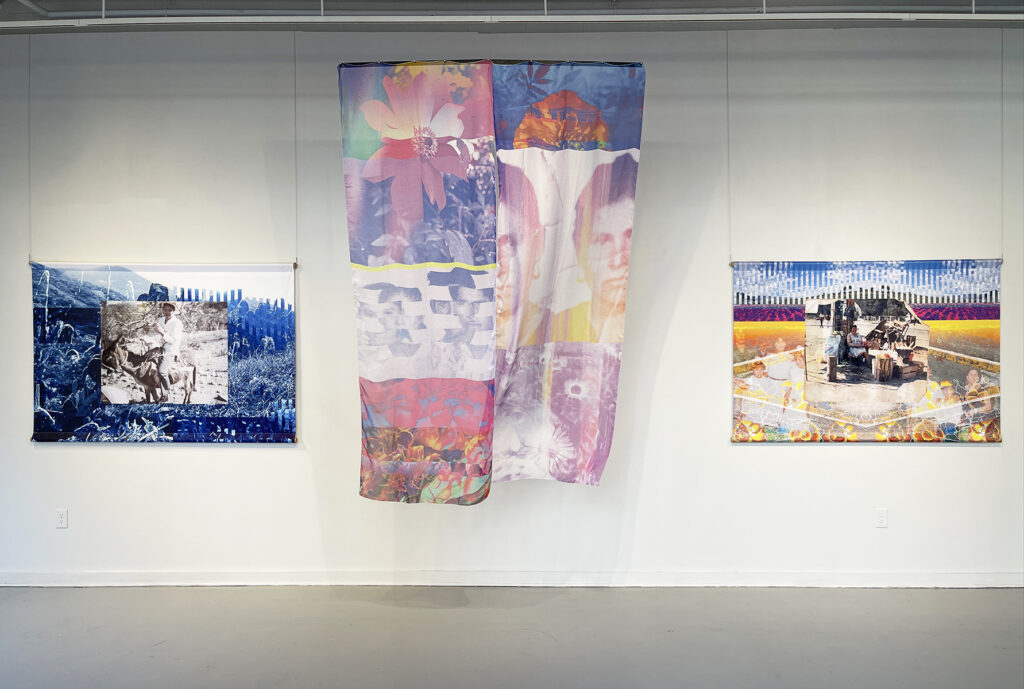
Interview with Edgar Reyes Fragments Edgar Reyes is a multimedia artist based in the Baltimore and Washington D.C. area. {{{{link id=’2425056′ text=’Visit Edgar’s exhibition’}}}} For an introduction, would you please expand on your artists’s statement? So my art practice is really centered around my own experience of growing up in the DMV area. Mostly diving into my relationship as an undocumented student and the relationships that I’ve had with my family members as they relate to migration and displacement. So, my work has a lot of emotional connections and sentiment behind it, as well as a lot of beauty. And that’s what the show is really about, highlighting those emotional, but also beautiful things that come out of stories of migration. I think just in general, my work really speaks to the historical reasons for who I am and how that relates to the way people view me, and why I exist in the spaces that I do. Why did you decide to title your show Fragments? I think fragments for me is really just relating to the way that memory is ephemeral, the fact that it’s free flowing and everybody’s experience is very different in the moment. As well as this idea that we only share a space with people for a moment in time. And it’s those fragments of time that really make us who we are, paired with the concept that we carry generational trauma and generational memories. So this idea of fragments is all these layers that make us who we are. We’re not just one thing, we’re all these fragments of things, along with experiences that didn’t happen to us from our past generations and the people who came before us. I know that the majority of images in your show are pulled from family photos or your own personal archives. I was wondering if you would talk about some of those images and the stories behind them, along with the ways using a personal archive fits into your practice? I think as an artist, there’s a sense of privilege, even saying “I’m an artist” carries a lot of weight. So, I think it’s really important for me, for lack of a better word, to be my own family’s historian. What I’ve taken on as part of my journey is to really look at my family and ask, what are they photographing and why? What are they keeping? And my grandma whenever I go visit her, I always pull out the top drawer of her dresser where there’s a whole array of photographs that she has kept over the past 20 to 40 years. It’s really beautiful just to see those little mementos, sort of relating back to the title, those moments that she’s kept. And what you see in the gallery, are pieces of that, but also some photographs that I’ve been fortunate enough to take as I’ve been able to travel back to Mexico and visit family. So it’s a whole mixture of documenting both what my family has kept up, but also documenting my own journey of being able to go back, and being able to reconnect and breathe that air again from where I’m from. But also a place that I have mixed feelings about whether it’s home or not, because I’ve lived in the U.S. for so long. I think to answer that, I think the imagery really is about documenting my family’s history and showcasing or highlighting the journey that my family has taken in various shapes, various forms, in a beautiful light. When people hear of migration, or just hear of people that have been displaced, pain is often centralized, and I’m showing that, but I want to show it in a beautiful way. I’m curious if the works on the pedestals are mostly composed of found elements or if they are pieces that you’ve sculpted? Why did you select those objects and what are the stories behind them? So, there’s a few different sculptural elements that are part of the show. And I’ve been playing around with this idea of these concepts that I have included in the fabric pieces along with the sculptural forms. For me it’s part of documenting my family’s history, while also looking at the historical relationship of what’s happening around the world during the time that is being referenced in my family’s images. How has my last name come into existence? How have my family’s beliefs come into existence? And religion has played such a vital role in that, along with agriculture and what we eat, what we consume, how we make a living, that’s all intertwined. So, these sculptural forms are speaking about that specifically. There are sculptures of the Virgin Mary all throughout the gallery, all the sculptural elements that are dipped in black, and they’re just kind of silhouettes all throughout the show. And those are a reference to many things, both growing up in a single family household, as well as an homage to the women who play such a vital role in our family, while also critiquing the role that Catholicism has had in shaping some of these negative stigmas that exist within my family. As you notice throughout the whole gallery, there are hints of some of that indigenous, spiritual essence. Some of the figures, one of them is a depiction of the Aztec god and she’s the only piece and the only idle there, that’s not dipped in black. And I really wanted to highlight the fact that in Mexico, Catholicism has kind of co-opted some of those beliefs and reshaped them and, for lack of a better word, colonized the people from those regions. So it’s both an homage, but also a critique on the role that our beliefs have had. And then throughout the rest of the sculptural elements, I’ve some other mementos from my travels. For example, the Aztec figure, that idol, was from my first time ever visiting some