Heather McMordie
Bio
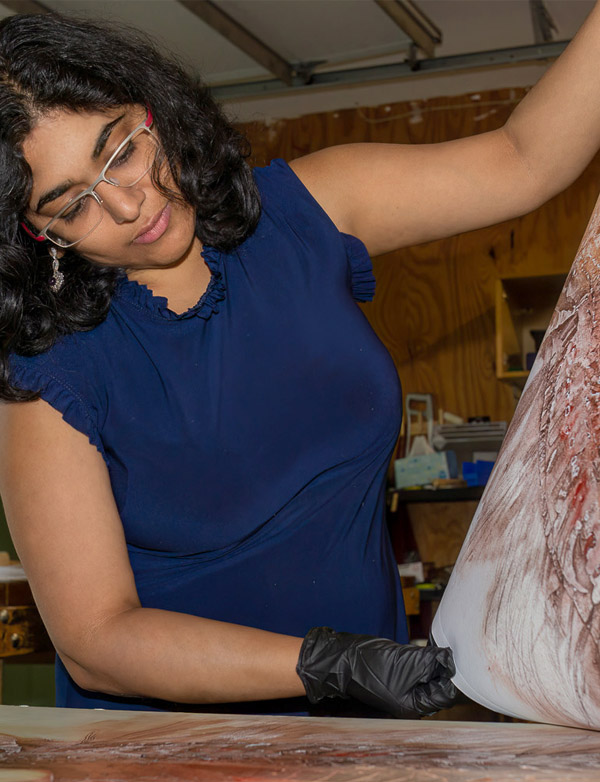
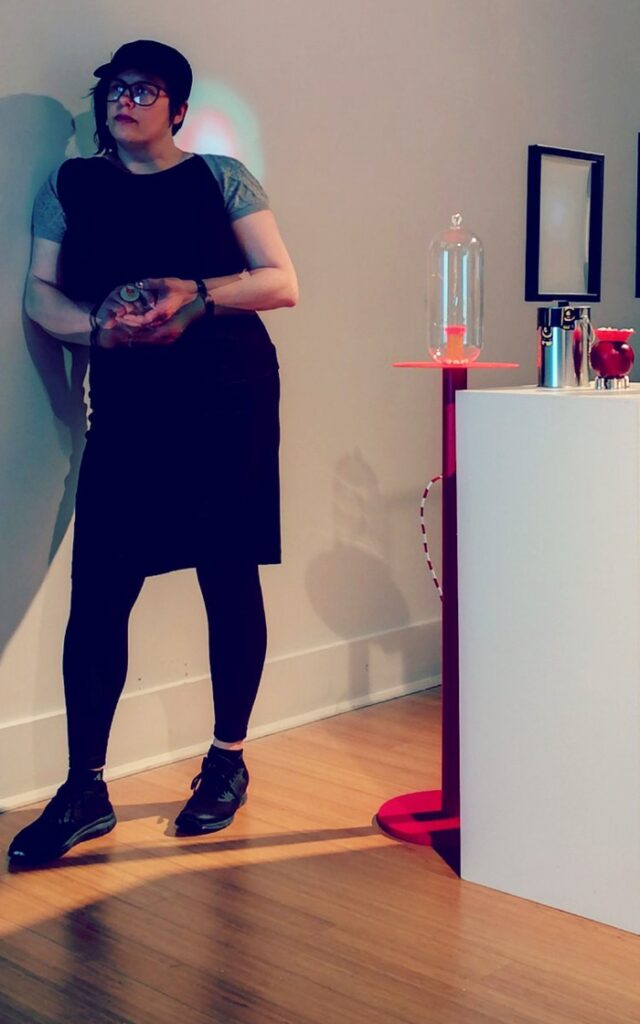
Heather McMordie is an artist, educator, and curator based in Arlington, VA. Her work explores the complexities of soil science and environmental restoration through prints, puzzles, artist books, and interactive installations. She is especially interested in how experiences with art objects can mirror field research experiences and create opportunities for tacit learning. She has developed projects through field explorations and collaborations in Guyana, South Africa, and the US. Her work is in the collection of the Georgia Museum of Art, and has been exhibited in museums nationally, including the Newport Art Museum, RISD Museum, and Schuylkill Center for Environmental Education.
Artist Statement
I use printmaking to explore the complexities of soil systems and the lives they sustain. Informed by on-site scientific research, my prints, installations, textiles, and artist books are often interactive, inviting viewers into an in-gallery action that parallels environmentally conscious real-world actions. Each piece acts as a point of entry into tacit bodies of knowledge (the things we only know after feeling, smelling, or even tasting an ecosystem) within soil science.
Learning from soil scientists, restoration ecologists, ornithologists, and others has impressed upon me the importance of physical experience in developing a holistic understanding of place. Recently, my focus has been on salt marsh soils and coastal restoration efforts. This body of work draws inspiration from the biological diversity of salt marshes and labor poured into restoring these ecosystems and asks: How can we labor towards environmental care together? Through artist books, sound works, interactive mending projects, and collaborative prints, I strive to create dynamic and multi-sensory art experiences, inviting viewers to look and act with care.
2025
- 2026
Edgar Reyes
Edgar Reyes is a multimedia artist based in the Baltimore and Washington D.C. area. Reyes earned his M.F.A. from Maryland Institute College of Art and has taught at non-profit organizations, schools, and museums.
2021
Liz Donadio
Liz Donadio is a Baltimore-based photographer and video artist whose studio practice is inspired by natural spaces and our human impact on those spaces. She documents surrounding environments with analog and digital media, culminating in photographic prints and immersive installations.
Donadio received her MFA in 2012 and her work has been exhibited and screened across the U.S. and Canada. Over the past year, Donadio has participated in festivals, conferences, group exhibitions. She is currently a Lecturer at Towson University in the Department of Art + Design and Art History and runs Color Wheel Digital Printing, a fine-art print service in Baltimore.
During the Bresler Residency, Donadio will focus on a new project using Rock Creek Park as subject matter. She will move back and forth from the park and the studio, documenting with digital and analog photography, shooting and editing video, and making audio field recordings. This will culminate in a multi-media sensory installation representing Rock Creek’s history and evolution, to bring it into an artistic context.
2018
Heloisa Escudero
Heloisa Escudero grew up in São Paulo, Brazil, but relocated to the United States in 1987, where her interest in Fine Arts developed. She obtained a Bachelor of Fine Arts from the Massachusetts College of Art and a Master of Fine Arts from the San Francisco Art Institute. She holds American, Italian and Brazilian citizenships. She is interested in conceptually based art that is both tactile and interactive. Her most recent art projects focus on art that emphasizes the participation of the viewer. In 2007 she moved to Sweden where she worked as a full-time artist, creating four successful projects and exhibiting in Sweden as well as in Spain. During this time she built the first three BackPack Gallery Sculpture Units, starting the BackPack Gallery Project. In 2010, she relocated to New York City, where she collaborated with DJ Spooky (Paul D. Miller) in the project Terra Nova: Sinfonia Antarctica. This collaboration was exhibited at the New York Photo Festival 2012. One of her exhibition was held at the popular urban park, The Highline. In the beginning of 2013 Heloisa has set up her studio in Arlington, Virginia, where she is working on collaborating with DC area artists in several projects.
When Heloisa Escudero is not in her studio making art she is working at the Hirshhorn Museum as an Exhibit Specialist. In 2013 she had her first DC area exhibition in Rosslyn as part of the Supernova Pink Line Festival. The BackPack Gallery Project was also part of the recent Dumbo Arts Festival 2014 and the Governors Island Art Fair 2014, both in New York City. In January 2014 Heloisa premiered her new performance “Everyone Is a VIP” at the SOMArts Gallery in San Francisco. She was part of the annual performance festival “100 Performances For The Hole.” Heloisa was one of the few selected artists who were awarded a commission to perform. Escudero has just received a “Special Opportunity Grant 2014” form the City of Alexandria to perform a collaborative exhibition with artists in the DC Area. She has also been selected as a Fall Solo 2014 artist at the Arlington Art Center.
2018
Antonio McAfee
Antonio McAfee is a photographer raised and based in Baltimore, MD. He received his BFA in Fine Art Photography from the Corcoran College of Art and Design and MFA from the University of Pennsylvania. He received a Post-Graduate Diploma in Art, in the Arts and Culture Management from the University of the Witwatersrand (Johannesburg, South Africa).
Recent exhibition venues include Walters Art Museum, Kreeger Museum, Academy Art Museum, University of Maryland, and Baltimore County’s Albin O. Kuhn Special Collections Gallery.
Antonio is an Artist in Residence at VisArts (Rockville, MD) and Wesley Theological Seminary (Washington, D.C.). McAfee is a professor at Towson University, Loyola University Maryland, Maryland Institute College of Art, and American University.
2020
Kim Sandara
Kim Sandara is a queer, Laotian/Vietnamese, artist from Northern Virginia and now based in Brooklyn, NY. In 2016, she graduated from the Maryland Institute College of Art, with a BFA in General Fine Arts. She’s shown work at various DC community events. in 2019, the National Museum of Women in the Arts’ gift shop collaborated with her to create an event “Being” showcasing her work and guiding visitors to draw music. She has been featured in Visart’s Gen 5 exhibition, the Torpedo Factory’s 2019 Emerging Artists exhibition and the Washington Project for the Arts’ 2019 Auction Gala. In her Torpedo Factory summer 2019 Post-Grad Residency, she created a stop motion animation about her parent’s immigration story intersecting her coming out story. She used the studio space as a shop to fund raise for local and national LGBTQ+ non profits empowering queer youth. In her 2020 Bresler Residency at VisArts, she focused more on Lao identity work. She’s currently working on her graphic novel “Origins of Kin and Kang” about her coming out story and collaborating with Legacies of War to help fund removing the bombs left over from the Secret and Vietnam Wars from Laos. She is eager to integrate into creative, queer and Asian communities in Brooklyn.
2020
Andrew Hladky
Andrew Hladky is a British artist and MA graduate from Wimbledon School of Art, London, now living and working in Kensington MD. Since moving to the US in 2015 he has had 3 solo exhibitions at Artspace NC, Arlington Arts Center VA, and Hardesty Gallery OK. He has been awarded many fellowships and residencies, including at Yaddo, Jentel and a Pollock-Krasner Fellowship at Vermont Studio Center. With the collaborative group, On Innards, he published an artist’s book in 2015, now in the SAIC Artists’ Books Collection, Metropolitan Museum New York, and the MoMA Library and Archives, among other collections.
2020
Safiyah Cheatam
Safiyah Cheatam is a visual artist, researcher, storyteller, arts educator and administrator based in Baltimore, MD. She focuses on material culture and social phenomena involving Black Muslims in the United States, and the role of Afrofuturism in Black folks’ daily lives through which she explores the nuances of duality existing within Black and Muslim people. For her work as a co-producer of her awards-nominated podcast OBSIDIAN, she is the recipient of a Red Bull Arts Microgrant and Rubys Artist Grant by the Robert W. Deutsch Foundation. Safiyah was a 2021 VisArts Bresler resident artist and has notably collaborated with the Baltimore Museum of Art, Walters Art Museum, Morgan State University’s Center for the Study of Religion in the City, Black Islam Syllabus, Rap Research Lab. She has been featured in The Washington Post, NBC News, BmoreArt, and has exhibited artworks nationally.
2021
Fargo Tbakhi
Fargo Tbakhi is a queer Palestinian performance artist, a Taurus, and a cool breeze. Find more at fargotbakhi.com.
2021
MJ Neuberger
MJ Neuberger engages self-created rituals, elemental processes and native traditions as metaphors for reoccupying bodies abandoned across generations by colonial, racial, and gender-based violence. She attempts to mend an heirloom cloth with her hair to acknowledge a connection to indigenous Filipino weavers denied by members of her family. Sculptural works, images, and light-based and performative installations and events offer the viewer haptic and visual opportunities to embrace shared vulnerability and alterity.
Neuberger has presented work at Art Resources Transfer, Gathering of the Tribes and the Nuyorican Poets Café in New York and at exhibitions in Maryland, North Carolina and Indiana. She teaches art at Towson University, works with underserved youth as a makerspace coordinator and organizes community-based art/performance events. Her writing and criticism have appeared in SPIN, The Nationand the Village Voice.
2019
Megan Koeppel
Megan Koeppel is a textile artist from Milwaukee, Wisconsin. She earned her BFA from the Maryland Institute College of Art in 2018, where she studied fine art and curatorial practices. Her work was recently exhibited at The Museum of Quilts and Fiber Arts (Cedarburg WI), Material Gallery + Studio (Milwaukee WI), VisArts (Rockville MD), Monochrome Art Fair (Washington DC), and at Creative Alliance and the Walters Art Museum (Baltimore MD). She was a 2022 Janet and Walter Sondheim Artscape Prize Finalist and a 2022-2023 artist-in-residence at Arrowmont School of Arts and Crafts.
2023
Gabrielle Tillenburg
Gabrielle Tillenburg (she/her) is an independent curator from Rockville, MD. As an art historian, she specializes in modern and contemporary Caribbean and diasporic art while pursuing her doctorate at the University of Maryland in College Park. Her research focuses on artistic responses to US military presence on the Caribbean and Pacific islands. Bridging her scholarship and curatorial practice, she is interested in artist activism in independence movements, interpretations of time in photographic media, and contemporary use of craft materials. Her curatorial projects have included Re∙Cast: Sculptural Works from the AMA Collection at UMD Art Gallery, Past Process at Strathmore, Soft Serve at Willow Street Gallery, and public art installations at Torpedo Factory. She has worked on Smithsonian National Portrait Gallery exhibitions such as the Outwin Boochever Portraiture Competition and was the Exhibitions Coordinator at Strathmore. She holds a BFA in Film from the University of Central Florida.
2022
Alison Kysia
Alison Kysia is a potter, multimedia artist, and educator whose work centers Muslims, Islam, and Islamophobia. She is an artist resident at Red Dirt Studio in Mt. Rainier, Maryland. Alison was the director of the Challenge Islamophobia Project at Teaching for Change and a facilitator with the Muslim Anti-Racism Collaborative. She is the creator of the 99 Clay Vessels Project.
2021
Cecilia Kim
Cecilia Kim is a video artist born in Seoul, South Korea. Kim has received her MFA in Photography+Film from Virginia Commonwealth University and BFA from the School of the Art Institute of Chicago, and has also lived in Australia, England, Singapore, and the United States.
Kim was awarded Best in Show at The 19th Trawick Prize: Bethesda Contemporary Art Awards. Her work has been shown in solo and group shows including The Immigrant Artist Biennial (NYC, virtual), the 6th Louisiana Biennial (Ruston, LA), 0 GALLERY (Seoul, Korea), Hamiltonian Gallery (Washington, D.C.), The Anderson Gallery (Richmond, VA), Hume Gallery (Chicago, IL), and Sullivan Galleries (Chicago, IL); and at film festivals and screenings including the NoFlash Video Show, Around International Film Festival Amsterdam, and Student Experimental Film Festival Binghamton. Kim participated in the Busan International OpenArts Residence and Ox-Bow School of Art and Artists’ Residency. She is currently a 2021-23 Hamiltonian Artists Fellow.
2022
Murat Cem Mengüç
Murat Cem Mengüç is a Turkish/American artist, writer and historian. He holds a PhD in Middle Eastern Studies and was an academic until 2017. Since then, he had two solo shows and participated in numerous group shows. Both his art work and writings appear in a number of websites, academic journals and edited volumes, including Hyperallergic, Maggot Brain, International Journal of Ottoman Studies and Journal of the Society for Armenian Studies. He is the founder of Studio Teleocene and the publisher of the Covid Magazine.
2023
Charlotte Richardson-Deppe
Charlotte Richardson-Deppe is a queer feminist artist working between performance and soft sculpture. She received her MFA in Studio Art from the University of Maryland, College Park, where she teaches as a lecturer in the Department of Art. In Fall 2023 she will be the Bresler Resident Artist at VisArts and the Montgomery College Artist-in-Residence in Rockville, MD.
2023
Katie Kehoe
The funds will be used to advance the project I developed during my Bresler Residency at VisArts. During the residency, I created a series of provisions for buoyancy made from materials salvaged locally in dumpsters, dumpsites, etc., and used these devices as props for performance actions in Washington, D.C. The project I’m proposing to pitch at F.E.A.S.T., involves my using the provisions created during my residency to perform actions in D.C.’s sister cities: Baltimore, Philadelphia and New York. I intend to do one 8 hour performance action in each of these cities and–given I have a wide enough network in Baltimore–a second in Baltimore where I will invite people to participate by walking with me for 1-2 hours, carrying readymade provisions through an area threatened by rising sea levels.
Finally, this project directly addresses the theme of Future Framers: Envisioning 2040, as it aims to put into perspective how water levels will change as a result of climate change. And through these performance actions, the project aims to engage the community members who live, work and enjoy these cities, while also extending the work beyond the local level, through the documentation process, thus inspiring people all over the nation and world to consider how sea level rise could impact their locals.
Visit Katie Kehoe’s Blog
www.provisionsforbuoyancy.blogspot.com

Kehoe is working with locally salvaged materials to make a series of nautically themed mock survival devices. Once complete, she will activate these “survival devices” in publicly accessible locations, using them as props and catalysts for interacting with the public. This process is being documented through a blog entitled Provisions for Buoyancy.
Kehoe’s performance actions will be conducted away from water and when possible, performed in densely populated places where, if the sea level were to rise by a given amount, the site would become flooded, such as with low lying sectors of Washington, D.C. and Baltimore, MD.
Kehoe will also produce a series of drawings that reflect projected changes to local waterways, should sea levels rise. “I envision these to be drawn in a visual language inspired by topographical maps and composed of multiple repetitions of the word AND,” Kehoe says.
Quote from Susan “An inventory of boogie boards, a rescue ring, a shack raft, and lifesaving vests is growing in Katie Kehoe’s studio at VisArts. Along with transforming raw materials into sea-worthy flotation devices, she is starting conversations. Her work addresses big issues — sustainability, shifting shorelines, rising sea levels — but she encourages discussions by gently disrupting the ordinary and generously including everyone. She is an artist for the 21st century.”
Katie Kehoe (Born in 1979, Canada, currently living in Toronto, Canada) predominantly works in performance, installation and drawing, and often incorporate duration, site-specificity, photography and video as defining artistic elements. She completed her M.F.A. at the Maryland Institute College of Art, Baltimore, Maryland (2011); and formerly completed the Canadian Film Center Media Lab’s Interactive Art and Entertainment Program, Toronto, Canada (2007); and earned a B.A. Honors from Saint Mary’s University, Halifax, Canada (2002). Kehoe’s work has been presented across Canada and the U.S. and widely reviewed by critics such as Gary Michael Dault (Canada’s leading art critic), Becky Hunter in Art Papers Magazine and Eames Armstrong in Performa Magazine.
In the vein of Darren O’Donnell’s Social Acupuncture, Jon Rubin’s Contextual Practices, and the infamous Marina Abramovic’s The Artist Is Present, Kehoe’s focus is an exploration of how performance art translates into a social practice.
Kehoe spent more than a year carrying a fishing rod and wearing rubber boots in Baltimore, MD, in One Year and Twenty-Four Days of Fishing (2010-11). A recognizable figure around the city, Kehoe used these ‘absurd objects’ as a catalyst for interaction with her audience. “A lot of people just want to be heard,” Kehoe said of the experience, “The fishing rod was an incredible device to actuate discussion.”
In PIER/PLATFORMS, Kehoe launched a successful Kickstarter campaign to fund construction materials for installations throughout the Southwest. Kehoe salvaged materials and built a pier in multiple locations including desert landscapes, tourist destinations like the Prada Marfa Store in Marfa, Texas, and art galleries in San Antonio and Denver. Her trip was chronicled through a blog.
An M.F.A. graduate of the Maryland Institute College of Art, Kehoe’s work has been presented across Canada and the U.S. and widely reviewed by critics such as Gary Michael Dault (Canada’s leading art critic), Becky Hunter in Art Papers Magazine and Eames Armstrong in Performa Magazine. She predominantly works in performance, installation and drawing, and often incorporates duration, site-specificity, photography and video as defining artistic elements.
2017
Kanat Akar
Kanat Akar (1991) is a photographer and a visual artist from Ankara, Turkey and currently living in Baltimore, Maryland. Using photography and electronic media in his practice as a communication tool for the visual investigation of the human experience, he aims to tell effective stories about people in a politically and socially loaded environment that we are living in. He received his MFA degree from Maryland Institute College of Art, Photographic and Electronic Media Department in 2018. He also has a BA degree in Economics (2014) from Bilkent University, Ankara, Turkey.
As an artist, through photography and video, I focus on socially and politically driven contemporary issues, claiming space to explore larger ideas through people’s everyday stories and experiences. On my work, my recent focus is the discussion of temporality and displacement and I aim to ask the following questions by creating my visual work: How do we define what it means to belong somewhere? What does it mean not to belong somewhere? What does it mean to be in the wrong place at the wrong time? How does it feel to be a problem? I focus on the clues that might give hints to these questions by telling stories about myself and the people around me in the social and political atmosphere that we are surrounded by. During my time at the Bresler Residency I would like to approach to these questions and further investigate the ideas that constitute home and the meaning of belonging to somewhere and/or displacement with a new project. Those notions and feelings are highly subjective and belong to the human experience, however, they are being affected by the social and political circumstances and atmosphere. Hence, by using digital and analog photography, as well as video, I would like to discuss the concepts of temporality and displacement with my visual work by investigating the idea of home and the sense of belonging. Home: either a place that gives the feeling of safety or a destination, a place that is far and not yet reached.
2018
Jack Warner
“I make enclosures, spaces, and objects directly relating to the proportions of the body and its use. I consider how one might move around these places and feel at ease or experience discomfort, relation or alienation: physical and mental discomfort either through the materiality of a heavy object, or the tight confines of erect walls; relation to the size of one’s body; or alienation from the unknown use or coded symbols. Through the framework of the military, the way it is structured, ordered, standardized, and fashioned, my work questions the performance of the body within structured environments.”
Jack Warner is a Maryland artist who currently lives in Silver Spring. Born in 1987, Jack grew up surrounded by the art of his grandfather Elwood Cooke, a D.C. native. His interest in art was reinforced during his first two years of college at Salisbury University, however, pursuit of an art degree was postponed due to personal and time specific events. Jack joined the United States Marine Corps in January 2008, shortly before the troop surge in Afghanistan. He served on active duty in Jacksonville, North Carolina. In 2010 he deployed to Afghanistan as part of Operation Enduring Freedom. In 2012 he left active duty and returned to Maryland to finish his undergraduate studies in studio art at the University of Maryland, College Park.
2019
Diane Szczepaniak
In her paintings and sculptures, Diane Szczepaniak strives to move away from a human-centered world, into one populated entirely by objects composed of form and space. She refers to her artworks as places where the forms are free of the meanings we assign to objects around us. Rather than fulfilling human needs, these forms exist independently and come alive on their own. The forms are entities of color and light that can hold and reveal the essence of being.
Since the early 1980’s, Diane has been driven by the study of the dynamics of form. Initially focused on drawing and sculpting the figure, she worked through these media to an understanding of the physicality of objects in space, which has remained with her throughout her career and brought her directly to abstraction. Using this understanding of space as an inspiration, she creates paintings by layering translucent washes of paint on paper and canvas, in a process that reflects her early sculptural training. Inversely, her glass sculptures are a 3-dimensional representation of her painting process where each sheet of hand-blown colored glass represents a layer of paint. In both cases, each additional layer of color changes the whole.
Diane presents annual workshops exploring color, perception, and space with Dudley House at Harvard University in Cambridge, Massachusetts and is a member of the board of the Washington Sculptors Group.
For more information about her numerous exhibitions, awards and collections, visit her event page at www.dianeszczepaniak.com.
2019
Krista Caballero
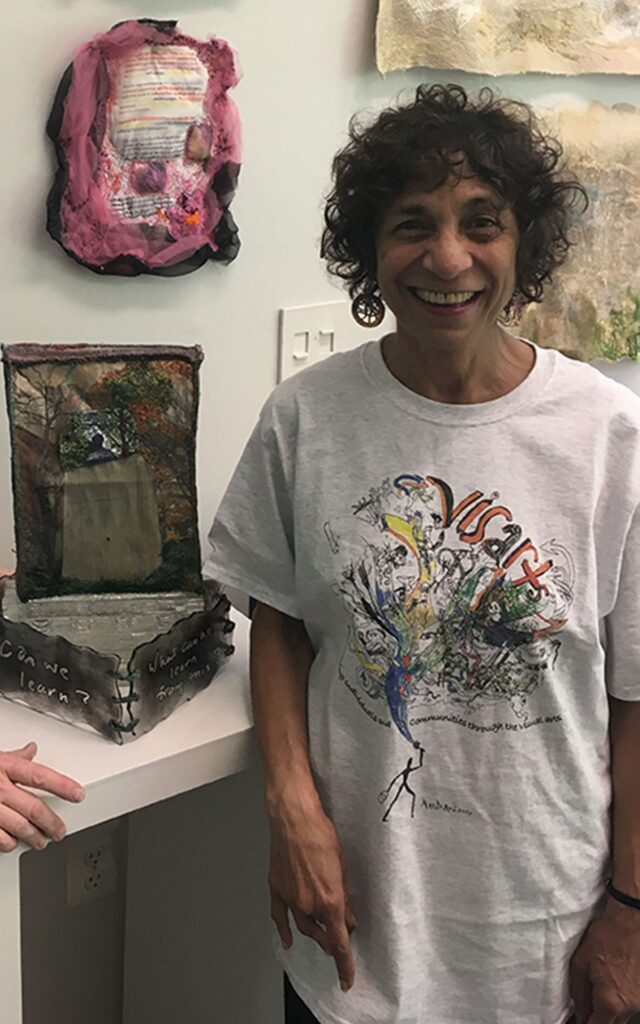
Krista Caballero is an interdisciplinary artist exploring issues of agency, survival, and environmental change in a more-than-human world. Moving freely between traditional and emerging media, her work creates situations for encountering alternative systems of knowing and perceiving.
In 2010, she created Mapping Meaning, an ongoing project that brings together artists, scientists and scholars to explore issues of ecological complexity through experimental workshops, exhibitions, and transdisciplinary research www.mappingmeaning.org.
She received her M.F.A. from the School of the Museum of Fine Arts/Tufts University and in 2009 attended the Skowhegan School of Painting and Sculpture. Her work has been presented across the United States as well as internationally in exhibitions and festivals such as the International Symposium on Electronic Art in Dubai, “Paradoxes in Video” at Mohsen Gallery in Tehran, Balance-Unbalance International Festival in Australia, and “A New We” at Kunsthall Trondheim in Norway. In 2017 Caballero was awarded a Smithsonian Artist Research Fellowship for Birding the Future, a collaborative project with Frank Ekeberg.
Caballero is currently the Director of the Design Cultures & Creativity program at the University of Maryland in College Park, Maryland. This honors program brings together students from all majors to explore emerging technologies and their impact upon the world (www.dcc.umd.edu).

Birding the Future is an interdisciplinary project that explores current extinction rates by specifically focusing on the warning abilities of birds as bioindicators of environmental health. The installation invites visitors to listen to extinct bird calls and to view visionary avian landscapes through a set of stereoscopic cards and video. This ongoing project investigates how declining bird populations signal profound changes across our entire planet, and considers what might happen when we can only see and hear certain species through technology.
While in residence a large-scale sculptural Kaiserpanorama, modeled in part by those seen in archival photographs, will be created for the next phase of the project. This interactive installation will include a number of viewing stations where people will have the ability to look through a pair of lenses showing stereoscopic (3D) images and video.
Birding the Future is in collaboration with Frank Ekeberg www.frankekeberg.no
2017
Maria-Theresa Fernandes
Maria-Theresa Fernandes found inspiration in the story of Anne Maria Weems, objects and newspaper archives from the Beall Dawson House collection, and the Confederate soldier statue currently boxed in plywood while it waits to be moved from the grounds of the old Rockville courthouse. Fernandes brilliantly embodies these historic facts in her textiles. In Transit refers to the back of Weems who was born into slavery and eventually escaped to Canada disguised as a male traveling.

Place, travel and environment play an important part in the fiber artist Maria-Theresa Fernandes’s internationally acclaimed work. Throughout her career, travel has given her the opportunity to reflect and create works relating to the surroundings of the countries she experienced. History and poetry are brilliantly woven into the fabric of Fernandes’s works, which translate her physical and emotional attachment to the lands she visited. Born in Kenya, Fernandes studied in London and Manchester, England. She received her B.A. (Hons) degree in Textiles with a specialty in Embroidery. The United Kingdom is the only country to confer this degree. A graduate from Cranbrook Academy of Art in Detroit with a M.F.A. in Fiber Art, Maria-Theresa Fernandes has participated in over 25 solo exhibitions and several international exhibitions. This global artist is the recipient of prestigious international grants and awards and such as the Pollock-Krasner Foundation grant, the Ruth Cheven Foundation award, and the UNESCO –Arts International award.
2017
Jay Hendrick
Jay Hendrick has been experimenting with ways to make a painting through a process he calls “stretch and restretch.” He decides how large a painting is going to be and then using stretcher bars that are often too small for the overall canvas, stretches a portion of the canvas, makes a painting, and then moves the stretcher bars to another spot. The final painting is an amalgamation of many paintings. Jay Hendrick also thought about how to involve the local community of painters with his studio residency. He asked painters Pat Goslee, Mei Mei Chang, Kathryn McDonnel, Matt Pinney, Becca Kallem, Amy Hughes Braden to collaborate with him on paintings. Hendrick gave each of these artists his paintings to work on. When the paintings came back to his studio, Hendrick worked on them again. Questions of authorship and intention are central to his investigation as well as curiosity. “I paint to learn,” says Hendrick. “The painting resembles a living thing. To paint is to understand paint in the same way that to live is to understand how to live.” The flexible, inventive ways that Hendrick approaches painting may reflect a direct relationship to his small town Texas upbringing. How to resist and challenge conditioned responses are operational challenges behind his investigation of painting. The grid acts as a stabilizing system that can be poked, prodded, and dissolved. The canvas can be folded, stretched again, draped, or thrown on the floor. There can be one artist or two or more making one painting. “Each time, I have to deal with what came before,” Hendrick says. This holds true for both painting and life.

Jay Hendrick (born Lubbock, Texas) lives and works in Fairfax, Virginia. His work has been shown in the United States, England, and Japan. He was featured in New American Painting 106. He received a Bachelor of Applied Studies and Bachelor of Fine Art from Abilene Christian University in Abilene, Texas. Hendrick received a Masters of Fine Art from George Mason University in Fairfax, Virginia. He teaches at Northern Virginia Community College in Annandale, Virginia. In 2017 he will exhibit his work at Trestle Gallery in Brooklyn, New York and will be a resident artist at the Torpedo Factory in Alexandria, Virginia.
2016
Amy Hughes Braden
Amy Hughes Braden uses painting to talk about things that she has trouble talking about. She says that she is concerned with the “density of painting”; how “it is the good way to be angry” and also “worldly.” Her paintings are visual, visceral platforms for a mash up of influences including feminism, personal history, current events, and art historical imagery. Partial figures or environments, words, thick and thin paint, and loud color appear often. Braden cuts pieces out of her paintings and stacks multiple paintings so that some parts are visible and other parts are covered. The paintings can be shifted and rearranged. Pieces of other paintings are attached to new paintings. They are assemblage in nature and suggest mutable states. Because the holes expose the stretcher bars (the skeleton of the painting), the paintings take on a risky violent character. The wall or scene behind the painting seeps in, strangely warping space, and challenging traditional classical concerns with creating an illusion. Braden’s paintings exist in a tipsy position as an incomplete thought or body that fluxes between repair and ruin.

Amy Hughes Braden is an artist based in Washington, D.C. She recently traveled to Rome with through the non-profit Transformer, as a part of DC’s Sister Cities grant program. In 2015 she participated in Transformer’s Exercises for Emerging Artists program (E12), in collaboration with the Design Studio for Social Intervention from Boston. She created a social lab which explored what it means to be a feminist, and the resulting piece “Mrs. Alex Braden” was then exhibited at The Katzen Center. Braden shows work regularly in the DC/Baltimore area in both DIY and commercial spaces, as well as nationally. In 2014, Civilian Art Projects presented her solo exhibition, “Are You Gonna Eat That?” Braden is a current member of the art subscription service, Project Dispatch, a past member of the DCAC supported collective, Sparkplug 4, and a graduate of the Corcoran College of Art and Design. Her work was recently exhibited at School 33 in Baltimore, in a show curated by Cynthia Connolly. Beginning in January 2017 Amy will be the Artist-in-Residence at the Cafritz Foundation Arts Center at Montgomery College.
2016
Mei Mei Chang
Drawing rests at the core of Mei Mei Chang’s practice even when her work expands into inventive mixed media installations and soundscapes. She has been exploring the confluence of inner thought and feeling with external stimuli. During her residency at VisArts she initiated a community drawing project in addition to developing new mind-map paintings and drawings. Chang asked people to bring her an object that made them feel a strong emotion (anger, joy, fear, or sadness). She asked each person to tell her about the object, recorded their story, and made a drawing in response. Some people made a drawing along with Chang. Often the participants had little or no experience drawing, but when it came to making a visual expression of their story, the drawing just emerged. “This became a new way of making a drawing,” said Chang. “It was a real honor to listen to these incredible stories from a variety of lives. The objects, our conversations, and the drawings all became “the drawing,” a way of pulling a line out from an individual’s experience and tangling it into my experience.”

Mei Mei Chang received her Master of Fine Arts in Photography from Ohio University in 2002. As a mixed media and installation artist, Mei Mei explores various media to bridge her internal and external worlds. She is a lifelong student of the human psyche, fascinated by the mind’s ability to focus on details great and small without limits. Using her internal symbols, she creates rich visual images that are both highly personal and accessible to all.
2016
Corwin Levi
In a hyper-mediated and connected world, former VisArts Bresler Resident Artist Corwin Levi longs for experiences and places where he feels lost. Relying on his own wits and senses allows him access to a heightened, expanded awareness that fades when the GPS system is activated. In his solo exhibition of paintings, void drawings, video and void photographs, Levi concentrates on waves and the stars. He builds a metaphorical relationship between these vast unknowable spaces and the possibilities in the outer physical world and within individual personal experience.
Corwin Levi is a mixed media, project-based artist who whose practice centers around transforming ideas into experiences. He has shown across the country and been awarded fellowships and artist residencies both here and internationally.

Levi also enjoys including participants in his work, and has collaborated with other artists, the general public, and students of all ages, including a special high school class whose sole project was to create an installation for a museum. He has also curated shows and related materials, most recently working with artists such as Kiki Smith, Carrie Mae Weems, DJ Spooky, Amy Cutler, and others to publish a new collection of Grimms’ fairy tales.
www.corwinlevi.com
2015
Diana Ludet

2015
Kit Trowbridge
Created during her Fleur and Charles Bresler Residency at VisArts, working from a collected image bank plucked from print, internet sources, and storybooks, Trowbridge’s paintings are a mash up of images and references. Celebrities, animals, human body parts, cartoons, illustrations, advertisements, text and patterns crash over, squeeze between and gaze from shallow, ambiguous space. With horizontal borders at the top and bottom edges of the picture plane, the paintings suggest film stills. Multiple storylines appear to be running simultaneously and influencing alternate narratives. Her color, inspired by the Fauvist (wild beast) painters of the late 19th century exudes joy and bling, an exuberant baroque inclusion of everything.

Kit Trowbridge recently received her BFA from the University of Michigan Stamps School of Art & Design. In her work, Kit uses images from films, art history, architecture, and nature to build her painting surfaces layer by layer with a focus on color and shape.
2015
nwaọ
Artist Statement
Named after Nwaobiala, a group of Nigerian women who danced as resistance, I follow in the footsteps of my unyielding ancestors—dancing against marginalization by piecing together forgotten histories and inventing new memories. In ‘when did our bodies stop belonging to us?,’ I captured the history of and current attitudes towards tattooing in Nigeria and its Diaspora, tethering the erasure of Indigenous forms of tattooing to colonization. In my short film, ‘a new memory’, I stitched together the physical and spiritual lives of queer and trans Nigerians across time.
Leveraging my background in industrial engineering, I engineer community-owned, -centered, and -led systems of archivism, wielding the transformative power of art and connection to co-invent global Black LGBTQ+ community archives. My work, driven by a generational passion for storytelling, serves as a conduit for communing with our past, present, and future.
About the Artist
nwaọ is a Nigerian-American, queer, and agender multidisciplinary artist and archivist. Their work is a critical analysis and reimagining of Black physical and spiritual being within African historical and cultural contexts. nwaọ drives conversations about queerness and gender identity within the collective, cultural, and contemporary memory of the African Diaspora.
Learn more at nwaobiala.com
2024
Kiara Rivera
Artist Statement
The collection of information. An archive focuses on the preservation of records, documents, and memories. As a reflection of my upbringing by parents who fled their homeland of El Salvador and whose records burned in the civil war in the late 1980s, objects have become vessels of reflection. My practice is a means of creating a conceptual archive to mourn the historic redaction of personal records.
Using materials such as clay, metal, and natural fiber and applying industrial processes and fiber techniques to create bonds of fragility, balance, and resilience. I am interested in tactile sensibility as a method of archiving the intangible through gestures of labor. Through abstraction, I represent the sentimentality of repetitive labor to synthesize ideas of fabrication and objecthood as a means to attach memories and grapple with the present. An active reflection of a sense of loss and urgency to establish an archive.
About the Artist
Born in 1999, Kiara-Maribel Rivera is a Salvadoran American interdisciplinary artist based in Maryland. She earned her BFA from the School of the Art Institute of Chicago focusing on ceramics, fibers, and sculpture. Rivera’s practice is a synthesis of fabrication and objecthood as an archival process. She recently attended Praxis Fiber Workshop’s DWL AIR residency.
2024
Anna Kroll
Artist Statement
My work is multimodal but is always a dance – relational, adaptive, bodily, and fascinated with time. I work iteratively, each piece serving as a reincarnation. Dances become phone calls. Relationships become books. The work asks for our attention. My process includes research, observation and reveling in a subtle edit’s rippling effects. Like the cycle of water, seeping, shifting and changing form, sediment is gathered and left, it is the same water, but different. I think about your body as you enter the work. The water that was in my body was once in yours.
Artist Bio
Anna Kroll is a dancer, educator and interdisciplinary artist. Her work has been shown at festivals, theaters, rivers and subway underpasses, including FringeArts’ Scratch Night, Invisible River’s Schuylkill River Arts Day, Cathy Weis’ Sundays on Broadway (NYC), and Danspace’s Draftwork series (NYC). Her collaborations with Chloë Engel have been presented in Spark IV & Spark VI (Baltimore / online), at New Media Artspace (NYC/ online) and in The Mind on Fire Variety Show (Baltimore/online). She teaches Foundations and Special Topics courses at UMBC. MFA from UMBC in Intermedia & Digital Art, award for outstanding written thesis and exhibition.
2024
Diego Borgsdorf Fuenzalida
Artist Statement
I am a Chilean-American emerging artist working in weaving, natural dyes, soft sculpture, and video. My work emerges from my background as an ethnographer studying the memorialization of political violence during the Augusto Pinochet military dictatorship (1973-1990) in Chile. In Chile, political violence was driven by foreign interests in critical materials. However, in the wake of violence and the promise of a “return” to democracy, the roles of materials such as copper, wool, salt, and berries, in the formation and maintenance of these politics continues to be overlooked. My work is based on collaborating with these materials to investigate the role of non-humans, the environment, and affect in political violence and reconstruction. The weavings, salt crystallizations, quilts, and videos I make are not images, but rather, textures of life after violence. Working in the larger trans-Pacific diaspora in the United States, my pieces are reminders that the histories of violence, neoliberalism, and reconstruction are always ecological and are always material.
Artist Bio
Diego Borgsdorf Fuenzalida is an emerging Chilean-American fiber artist and ethnographic researcher, working in Washington DC. His work combines experimental ethnography and South American weaving, natural dye, and soft sculpture traditions to highlight the afterlives of twentieth century political violence in Chile and the broader trans-pacific world. Borgsdorf will open his first solo show, “Woven Ground” at Glen Echo Arts Park (Rockville, MD) in February 2025. He has exhibited in curated group shows at Room 3557 (East Los Angeles), Mile 44 (Los Angeles), Launch LA, and the Korean Cultural Center of Los Angeles. His artwork and research has been published by the Museo de la Memoria y los Derechos Humanos (SCL) and En Tránsito gallery (SCL). In 2024, Borgsdorf was an Iburra Arts and Research Resident at Blue Light Junction (Baltimore, MD) and an AllPaper Curatorial Seminar Fellow at the Benton Museum of Art (Claremont, CA), and has held curatorial roles at Los Angeles Contemporary Exhibitions and multiple NPS institutions. Borgsdorf graduated with a BA in Anthropology from Pitzer College with studio training in ceramics, fiber arts, video art, and printmaking.
2025
Trisha Gupta
Artist Bio
Trisha Gupta is a contemporary artist, community activist, and educator. Her Indian-American heritage heavily influences her work, and she explores themes of mental health and immigration.
Trisha’s dedication to preserving traditional folk art and fine Indian printmaking is a cornerstone of her practice. After being trained in the Western tradition of woodblock printing, she returned to Ahmedabad to delve into the art of Indian Woodblock carving. She has since made it a part of her practice to teach Asian printmaking processes like Indian woodblock printing and viscosity, sharing her expertise with institutions such as the Smithsonian, the Robert Blackburn Printmaking Workshop, and Pyramid Atlantic.
She believes in art as a platform for social change. As an Occupational Therapy candidate at Columbia’s College of Physicians and Surgeons in New York, she has taught art to diverse populations in schools, homeless shelters, and off Rikers Island. She has also run events at the Sandy Spring Museum and VisArts in partnership with Amnesty International. Her project, A Table for Everyone, hosted community dinners and public art projects to introduce new immigrants to the community. She has also created public programming for museums like the KidMuseum to promote South Asian Printmaking. She runs a community studio with a printshop and resident artists in Burtonsville, Maryland where she teaches printmaking and indian block printing. Her studio is a heritage site that promotes cross-cultural learning.
She received her graduate degree from MICA in 2024. Her work is listed in the New York Public Library collection, the Art Students League, and in collections internationally and domestically.
Artist Statement
As a multidisciplinary artist, all of my work is rooted in the concept of neurodivergence. As a neurodivergent immigrant woman, I returned to my art halfway through my medical degree to express narratives outside of a clinical context. Having trained as an occupational therapist with a strong background in art therapy, I glean concepts for my artwork from my clients. My clients have experienced incarceration, mental illness, neurological disorders, and physical health problems. Their stories are emblematic of the social norms that result in disparities and unjust outcomes. These disparities are used to inform my paintings, sculptures, prints, videos, and textiles.
My personal studio work is focused on prints, soft sculpture, installation, and other media that often depict body parts or architecture. For example, in my collagraphs and fabric work, my pieces are often informed by medical diagrams. I layer and combine delicate and transparent materials with dense and solid objects. I sometimes use intricate paper cuts, and on other occasions, use spontaneous found objects to show a balance between traditional and modern, trash and treasure, and synthetic versus organic. This results in intricate objects that represent flora, fauna, and the physical structures of the body. In contrast, my architectural work has an ethereal Asian aesthetic that depicts a sense of longing to find belonging.
Most of my work relies on a strong Indian palette. I often naturally dye my fabrics and create milled pigment inks. Vermillion, turmeric, indigo, and black iron pigments are distilled from plants, and powdered by employing the split lake dye pigmentation process. These four colors are heritage colors that are achieved through the distillation of mordants, dehydration of plants and the milling of pigments. I use yellow to represent turmeric and the soothing of pain. Indigo depicts brown and black skin, and divinity and ethnic darkness. Lighter shades of indigo depict medical blue. Vermillion depicts femininity. Each color is like an anthem that all these narratives share, in which an individual expresses power by being themselves and acknowledging their diversity.
I am also a community-based art activist whose projects work with participants over time to help them process loss, facilitate healing, and to collaboratively create public art. The process of creating the artwork involves the participant as a collaborator to explore narratives that critique socially complex issues like racism, sexism, and incarceration.
As my art practice evolves, I have embraced the role of a storyteller – a socially engaged one. These tangible works bring awareness to hidden experiences narrated by people outside of the bell curve. Ultimately, I aim to bring compassion and justice to marginalized groups.
2025