
Empathy Zone: Exhibition Part I
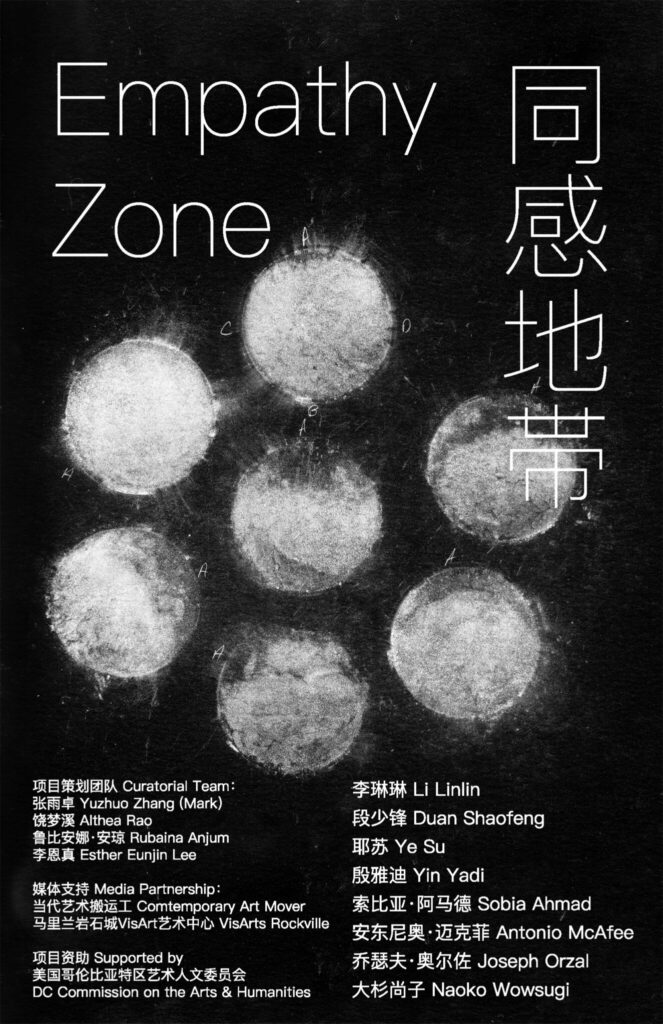
*封面设计:安东尼奥·迈克菲 Cover Art by Antonio McAfee 同感地带 | Empathy Zone 展览 两个的第一部分, 引进: 北京创作者: 李琳琳 和 耶苏 华盛顿哥伦比亚特区创作者: 索比亚·阿马德 和 乔瑟夫·奥尔佐 Exhibition Part I of II, Introducing: Beijing Creators: Li LinLin and Ye Su D.C. Creators: Sobia Ahmad and Joseph Orzal ♦ 李琳琳 Li LinLin (北京 Beijing) 李琳琳, 1992年生于黑⻰江北安, 2016年毕业于中央美术学院空间设计系, 获学士学位。自那时起, 她便一直工作和生活于北京。李琳琳曾于2015年参与诗婢家⻘年艺术助力计划, 于2016年获法国莱俪⻘年艺术奖, 罗中立奖学金, 于2018年获1912集团新星星奖, 于2020年获ARTCLOUD中国SAP艺术大奖年度新锐艺术家 (雕塑及装置类) 等等。她的作品及手稿草图在各大知名艺术机构展出或收藏, 包括中央美术学院美术馆, 中央美术学院基础部, 银川当代美术馆, 四川美术学院美术馆, 关山月美术馆, 安仁双年展, 北京时代美术馆, 漳州市博物馆, 元典美术馆, 金鸡湖美术馆, 年代美术馆, 原美术馆, 树美术馆, 偏锋艺术空间, 单行道画廊, 零艺术中心, 1X3 GALLERY等等。 Li Linlin (b. 1992, Beian, Heilongjiang) holds BFA in Spatial Design from Central Academy of Fine Arts (CAFA). Since graduation in 2016, she has been working and living in Beijing. She was a participant in Shibijia’s Young Artist Program (2015), a recipient of LALIQUE Nova Art Prize (2016), a Luo Zhongli Fellowship (2016) and the winner of 1912 New Star Art Prize. Li’s works and manuscript sketches are in collections of the CAFA Art Museum and CAFA Foundation Department. Her large-scale installation works has been exhibited or collected by the Yinchuan Contemporary Art Museum, Sichuan Art Academy Museum, Guanshanyue Museum, Anren Biennial, Yuandian Art Museum, Jingjihu Museum, and other private art galleries including Zero Art Center, 1X3 Gallery, among others. 作品两则 Two Selected Works: 稳定构成 Stable Composition, 2019 镜面不锈钢, LED灯带, 灯泡, 假发, 老电视机, 工业梯子, 树脂等, 受邀北京时代美术馆委托制作 Mirror stainless steel, LED light rope, light bulbs, wigs, old TV sets, industrial ladder, resin (Commissioned by Beijing Times Art Museum) “稳定构成” 这组作品主体为两个工业脚踏梯,一个倒挂在屋顶,一个落在地上。两个梯子之间相连, 上面装有各种材料的物件和日常生活用品, 比如窗户, LED 暖光灯管, 老式户外灯, 衣物, 鞋子, 以及用毛线缠绕的彩色树枝。屋顶和地面分别有不锈钢镜面台, 通过镜面不断重复反射, 把梯子无限连接在一起, 把有限的高度无限延伸。这件作品以“家的维度”为主题, 以梯子为主体的三角形暗含着稳定的结构, “家”是每个人内心都需要的一种稳定性和安全感, 是精神寄托和希望的延续, “家”是一个抽象的概念, 它不完全指变现为人们所能看到的社会构成和法定家庭模式, 更多的在于每个人对于“家”的心理精神寄托和假想, 每个人都在极尽能力的让自己生存在自我想要达到的那种生活物质精神状态中。 Stable Composition is a multimedia installation. The main body consists of two industrial foot ladders, one is hanging upside down from the ceiling and the other one has fallen to the ground. Mounted on the two ladders are daily objects of various materials, such as windows, LED light tubes, old-fashioned outdoor lights, clothing, shoes, and colored branches wrapped in woolen thread. The roof and floor are made with stainless steel mirrors; the ladders are reflected repeatedly through the mirrors, connecting infinite amounts of ladders together and extending the limited height to infinity. This work takes “the dimension/latitude of the home” as the theme, the main triangle structure outlined by the ladders implies stability. Similarly, the notion of “home” represents individuals’ natural needs for stability and security, is the continuation of spiritual support and hope. “Home” is an abstract concept, it does not fully refer to the social composition or legal family model that people can see or touch. The essence of “home” lies in everyone’s senses of belonging and imagination. Everyone is trying their best to live the kind of material and spiritual life that they see as ideal. 野人花园 Savage Garden, 2016 综合材料, (每件木箱的尺寸) 3m x 2.1m x 2.6m 9 Mixed Media, (Size of each box) 3m x 2.1m x 2.6m “野人花园” 指的是生⻓在文明之外的生命, 摆脱旧的文化传统和社会体制的束缚, 创造无拘无束的新生命。我们生活在一个被自身创造的文明所禁锢的时代, 社会结构日趋复杂和庞大, 如同一个巨大的笼子。这个笼子的系统在高速运转着并不断进化着。这种进化速度是我们人类自身无法控制的, 就像一列高速行驶的列⻋无法停下。我们远离自然或者自然远离我们, 但我们隐藏的本性呼唤原始与野性, 渴望逃出文明与教化, 这就是我创作这组作品的初衷。在这件作品里很多内容是关于“禁锢”这个主题, 箱子本身就是封闭和令人窒息的, 包装箱代表了工业社会与价值交易, 八个箱子以各自独立的方式表达了对野性与文明之间的关系的思考。 Thriving in the Barbarian Garden are beings beyond known civilizations. These innocent new creatures are free from old traditions and not bound by any existing social norms. As humans, we live in an era where the civilizations created by us get to define us. The structure of society becomes more and more complicated, forming a gigantic cage. This system of this cage operates at a high speed, a speed beyond our control, just like a very fast train running onward not being able to stop. We are pulled away from nature, or nature is pulled away from us. Yet the deep core of our body lies our primal desire of breaking through, running away, and escaping–civilizations and traditions. This is why I made this work. So much of it is centered around the idea of “restriction”. The shipping containers themselves are closed and suffocating. They embody values of industrialization and transactions. The 8 containers are their own individual statement on the relationship between nature and civilizations. ♦ 索比亚·阿马德 Sobia Ahmad (华盛顿哥伦比亚特区 D.C.) 索比亚·阿马德 生于巴基斯坦, 在14岁时移居美国。她于2016年从马里兰大学学院公园校区获得艺术创作系学士学位。她的作品已经被多家主流媒体进行报道, 包括Al Jazeera English, 华尔街邮报, The Huffington 邮报等等, 也被众多机构和个人所收藏。她的艺术在国际范围内被广泛展出, 包括洛杉矶的工艺和民间艺术博物馆, 纽约的Herbert F. Johnson艺术博物馆, 伦敦的玛丽女王大学, 女性电影人节 (Women Filmmakers Festival) 以及华盛顿的史密森学会美国艺术博物馆等。2018年, 阿马德 获得了弗蒙特艺术中心奖, 也是2019年度马里兰州洛克威尔市VisArts艺术中心的下一代艺术家奖项的获得者, 并成为2019-2020年度Halcyon Arts Lab艺术实验室项目的受邀驻地艺术家及研究者。索比亚·阿马德 的多媒介艺术实践关注个人和整体政治环境之间交织影响的各种呈现方式。通过绘制她自己个人的经历和社区故事, 并把这些与由古至今的社会政治的语境相互联系, 她强调了个人和庞大权力结构之间不可分割性。她的作品往往提出以下的相关问题: 是什么确认和驱散了我们的归属感?政治对与我们个体和社群的心智产生了何种影响?我们心灵深处对于归属感的挣扎又如何构成关于国家身份, 家的概念, 文化记忆以及性别的广泛对话? Born and raised in Pakistan, Sobia Ahmad moved to the United States at the age of fourteen. She graduated in 2016 with Honors from the Bachelor’s in Studio Art Program at the University of Maryland College Park. Her work has been reviewed in several major publications such as Al Jazeera English, The Washington Post, and The Huffington Post and has been included in multiple collections. She has exhibited internationally–including at the Craft and Folk Art Museum in Los Angeles, the Herbert F. Johnson Museum of Art in Ithaca, New York, Queen Mary University in London, and the Women Filmmakers Festival at the Smithsonian American Art Museum in Washington DC. Ahmad received a Vermont Studio Center fellowship award in 2018, was the 2019 recipient of the Next Generation/Sanctuary Artist Fellowship at VisArts in Rockville, MD, and is a 2019-2020 Halcyon Arts Lab Fellow in Washington DC. Sobia Ahmad’s interdisciplinary practice maps the various ways the personal and the political overlap. By charting her own experiences and community narratives and weaving them with current and historical socio-political contexts, she highlights the inseparability of the self and larger power structures. The work poses questions like: What confirms or dissipates our sense of belonging? What effects do policies have on our personal and collective psyches? And how can our deeply intimate struggles of belonging inform larger conversations about national identity, notions of home, cultural memory, and gender? 作品两则 Two Selected Works: 渺小的身份 Small Identities, 2017–ongoing 至今 穆斯林移民的证件照片被印制在陶瓷片上 | 尺寸可变 (2019年6月展出时共计108 件陶瓷片) Photo-transferred ID photos of Muslim immigrants on ceramic tiles | 108 tiles, as of February 2020, Dimensions variable 索比亚·阿马德 的另一件作品 “渺小的身份”则是对2017年川普政府对部分穆斯林国家实行旅行禁令的较直接回应, 也客观体现出这一不人道不平等的政策对伊斯兰群体, 尤其是伊斯兰移民的负面影响。艺术家首先开始从她身边的美国伊斯兰移民群体, 包括家人, 亲属, 朋友和同事等那里收集护照尺寸的证件照片, 接着将这些头像照转印到伊斯兰形制的阿拉伯瓷转上。值得一提的是, 其中的许多人出于恐惧, 不希望自己的证件照被展示出来。基于此, 艺术家在整体的雕塑群组中留了许多空白的瓷砖, 用来表示这些未被展示的伊斯兰人群。与此同时, 作为一个持续进行的项目, 艺术家也将不断地收集, 并不断的以匿名采访的形式, 记录着拒绝展示背后的缘由。护照照片上的伊斯兰面容仿佛成为了这个国家的公敌, 被指认和示众, 成为危险分子的代表, 而催生这一仇恨和不公的则是本不该出现且充满歧视意味的伊斯兰禁令。 In 2017, as the United States president issued an Executive Order to ban travel from several predominantly-Muslim countries, I began collecting passport-sized ID photos of my family, relatives, friends,
Interview with Antonio McAfee
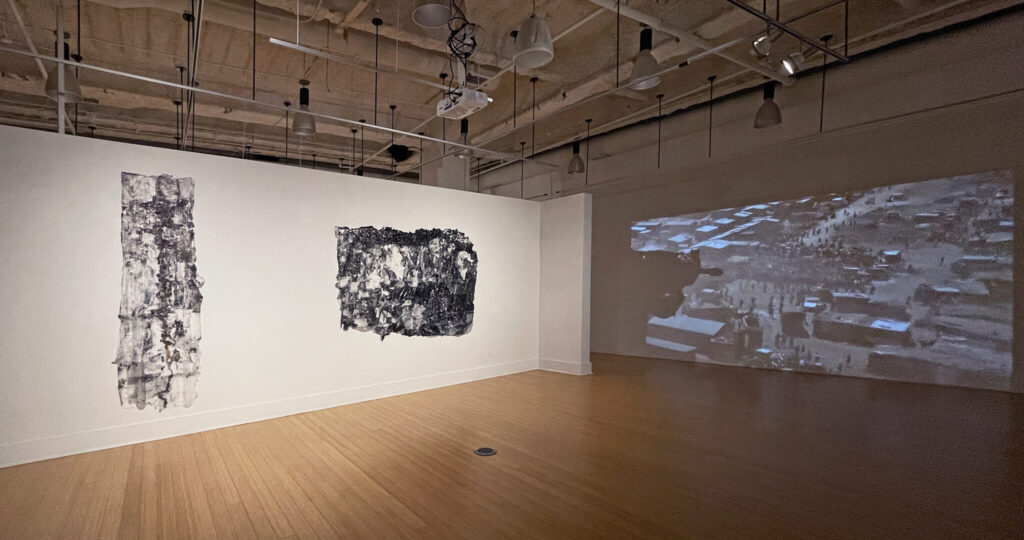
Interview with Antonio McAfee WWS 20 (Washerwoman Syndrome 2020) First question I usually ask all of the artists, what are you doing for VisArts? And why have you selected these particular works to be in your show? Around 2011 I started doing research on W.E.B. Du Bois and the exhibition of American Negroes. His research and info-graphs, detailing the middle class economic status of African Americans at that time and portraits that went along with the exhibition, are things I’ve been working from for the past nine years. Du Bois led me to research reconstruction, and I came across an instance of activism and protest by a group of Washerwomen who went on strike against the city of Atlanta in 1881 to advocate for higher wages and better working conditions. So, as I researched these women, I began to focus on collective agency, organization, labor rights, local policies and legislation, and how politicians influenced the labor force, and how the labor force had to push back against those entities for higher pay, respect, and decency. The idea of the collective and group agency has been swirling around in my head a lot, especially with a lot of the things that went on over the summer of 2020. Organizing and campaigning, and finding strength in numbers to combat whatever ills a person is going through economically, occupationally, personally. The show at VisArts is an articulation of all of that, but it’s also a container for my own feelings and how I went through the transition of being in my head, being very concerned about the virus, then finding a community through online platforms. I was spending more time on the computer, while also becoming more socially engaged and aware of what was going on. So the show has all of these ideas swirling around. There’s a video, in which I appropriate this protest scene from The Standard, which came out in 2008. It’s about a South African police officer who turned into the most accomplished bank robber in the country, and it’s wrapped around apartheid. There’s a protest scene in the middle that I sampled or appropriated, and put back into the video. I’m making horns or vuvuzelas, which is a South African horn that are used at football games. It sounds like a bunch of bees when you go to the stadium and hear all of these people blowing into the plastic horns. So that linked to my idea of the collective and the energy and the power around that. This year has been really unresolved. I’ve made some new work, four pieces that were at the Care museum in an exhibition that was in honor of the 100th anniversary of the 19th amendment. It’s been a whirlwind this whole year, especially since March, so I’ve been making pieces, but a lot of it feels quite unresolved at the moment. Part of it is that I’ve been in and out of the studio, so my momentum has been floundering a little bit. At the same time, there’s just a lot of emotions to grapple with and handle. For me, I didn’t feel like I had to change anything about my work because I was always talking about labor rights, and the humanity in labor and resistance, especially when it comes to American history and Black history as well. A lot of stereotypes towards African Americans that were deemed insufficient as far as labor, so being lazy or unintelligent, were just forms of resistance. For instance, when the slaves chose not to work or they would rest, or they would find ways to get out of work, that in itself was a form of resistance. It was articulated as being lazy, at the same time when you’re working for free and your whole life is preoccupied by the means of other people to give you resources for housing and food, you strategize ways to find time for yourself, or to control your own time, or control your own body. With the Washerwomen, I became enthralled by ordinary people who had the gaul to organize a campaign and go against the system that towered over them. I’m very interested in ordinary people that have a sense of mystery and lore, largely because of the way they were written about in history. The VisArts show is a culmination of all of these things. I’m focusing on three main bodies of work to keep myself focused and centered, but at the same time the work feels unresolved. The trick is trying to figure out how to capitalize on all of these unresolved feelings and experiences, while creating work that is still poignant and elaborate. How were you able to construct this unique style for yourself, and how were you able to develop and merge that into something that works for you in a multitude of mediums? In 2011 I decided just to work with the Du Bois portraits, and put glue on the prints and work from the prints after the glue was removed, so the images are distorted and partially faded. As I started to repeat this process I had piles of these dried glue by products, so I started putting medium and more glue on those to create sculptures. I started off very simple and snowballed the process or the method of making these things based on practicality. Finding materials that will still give me some see through areas, and this idea of a handmade transparency, started to become much more of a concern as I built on this process. I began to experiment with materials that would preserve the organic nature of the photo, as if the image formed itself, while also referencing negatives or transparencies. Through using this method and creative problem solving I began to create pieces that were larger and lasted longer. I started printing photographs on lexjet, which is a print adhesive paper, to make them a larger scale without needing frames for them as well.