
Interview with Blazo Kovacevic
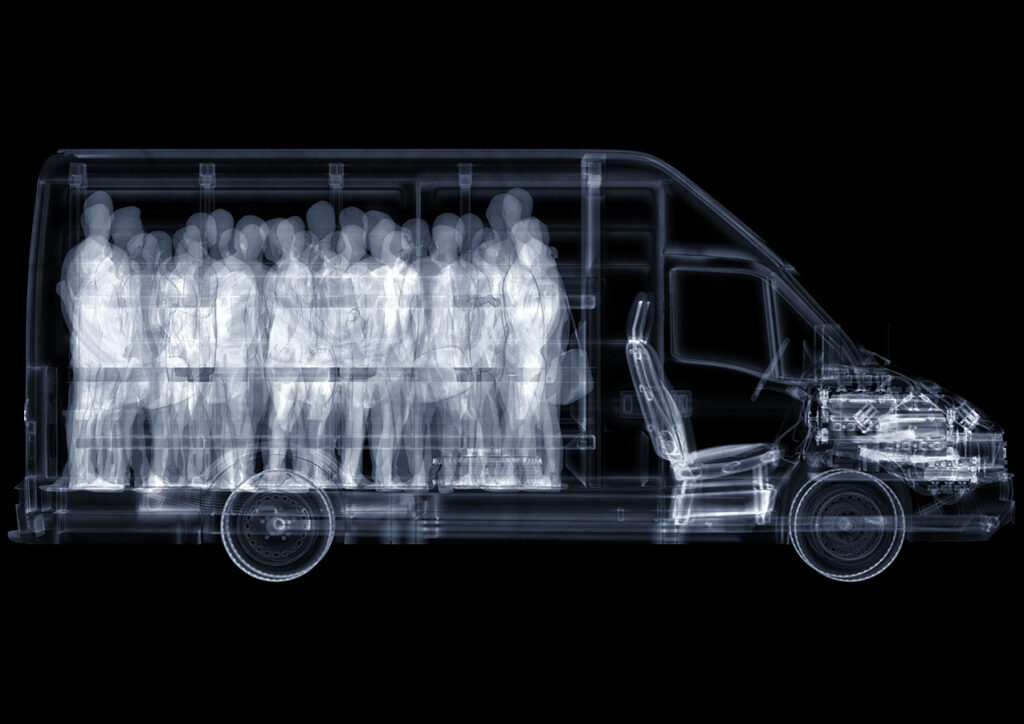
Interview with Blazo Kovacevic VisArts Exhibiting Artist from September 11 – October 18, 2020 interviewed by VisArts intern, Iona Nave Griesmann. Blazo Kovacevic (b. Podgorica, Montenegro) earned his B.F.A. in painting from the University of Montenegro in 1997, and his M.F.A. in painting from the Pennsylvania Academy of the Fine Arts in 2000. Incongruous social phenomena are reoccurring themes in his work; he is driven by a fascination with conflict. His work explores contradictory visual elements, and juxtaposes incompatible materials, ideas, behaviors, and technologies. Kovacevic has received numerous awards for his work, and has been interviewed and reviewed in distinguished art publications and media. His work has been shown in both Europe and the United States in numerous solo and group exhibitions. He is currently associate professor of art and design at Binghamton University (SUNY). Your bio mentions you have a fascination with conflict, and that your work frequently employs contradictory elements that coexist with one another. In your opinion, do you have a particular piece that best achieves this contradiction? I think that contradiction is very important for the artist to be successful. The artwork has to operate on several levels. Conceptually, on one level it is reaching some kind of state that I want the audience to be within my work, but also to depart from at the same time. So I’m searching for that sweet spot where two things can converge and coexist briefly. For example, I can point out a few pieces that are not in the show, where I would use X ray technology to depict intricate details of a case that is protective of musical instruments. And inside of it, I would put a knife or some weapon that didn’t belong there. But because of the beauty of design in both the musical instruments and the weapon, they fit on some level, although they have this opposite effect when you look at that conceptually. It’s a game I like to play, and when I succeed I feel that the work has more mileage, that it can go further. I also work in the design realm a lot, and there I also find if you can achieve that in the clarity of the message without being explicit, you can go to that design multiple times and it will spark more interest, as a message that resonates much deeper. Blue Violin Case (PROBE), 2010, Digital print on polycarbonate, 25”x47” View (PROBE) When we talk about the conflicting processes within my studio practice, we mainly focus on the durability of the work. In support of my concept I use the materials that are not compatible. I would paint on a tightly stretched steel mesh, or would mix acrylic and oil. More recently I started using opaque and transparent printing substrates simultaneously to achieve duality of images, for example one being visible only during the day, and the other only at night. Of course there is the aesthetics, the classical category of art, which is very important to me. Even if it is about the ugly, it’s still aesthetics of some kind. In many instances people go “Oh! Look at that, very nice, vivid pleasant decorative elements in there,” and only when they approach the image, does it start doing something else. Often, it’s escaping you constantly because of the optical properties of the material I use, or it can reveal something entirely different. Have you ever tried mixing an archival material with a more impermanent medium? I stopped obsessing over the permanence of matter. Of course after all the training, you have this imperative, “oh let me do this properly and use proper archival materials,” but then you realize that if the work is good it will either survive or not, and it’s beyond you. I think a lot of stress and effort goes into preserving something that probably departs, or maybe even alters the tolerance of what that work might become in the future. I am not concerned with the impermanence of my work. Rather, I embrace it as the integral part of the life cycle. Do you think there may be more power in impermanence, especially as different historical and societal concepts change around us? As we learn everyday, life will present us with unexpected challenges, and being from the Balkans, I’m not new to these moments. We’ve been through civil wars and conflicts every 50 years throughout our history, and perceiving life as a safe or an unsafe condition, is narrow. It is constantly in the flux, and you need to adapt. I think building resilience and being able to adapt to new environments is what artists do best. We always struggle on some level. Look at our daily routine – we make something out of nothing, and that is an existential pressure point we have to navigate all the time. What experiences or questions drove you to center “Incited Still” around surveillance technology, and its use in the dehumanization of undocumented people? I must say, my personal experience. In 1998 I was on a student Visa here, while pursuing graduate studies at the Pennsylvania Academy of Fine Arts. After graduation, I stayed for one more year on a practical training program, when the 9/11 hit. The global dissent to violence and fear fundamentally changed the position United States had towards immigrants. As an artist who traveled between the US and Europe, I was painfully reminded of the inequality and vulnerability of being “the other”. My Yugoslav passport was an express ticket to the airport hell of thorough strip searches, harassment and intimidation. Being stuck in the limbo of a “no man’s land”, in the liminal space in which the technology determines whether I am a threat to security, I started recognizing the patterns of this spectacle, and finding beauty in it. I was waiting behind, looking at the security monitors, probably seeing what I shouldn’t have, people going through this, their stuff being scanned… It was a voyeuristic feast, humiliating