
Sobia Ahmad Interview
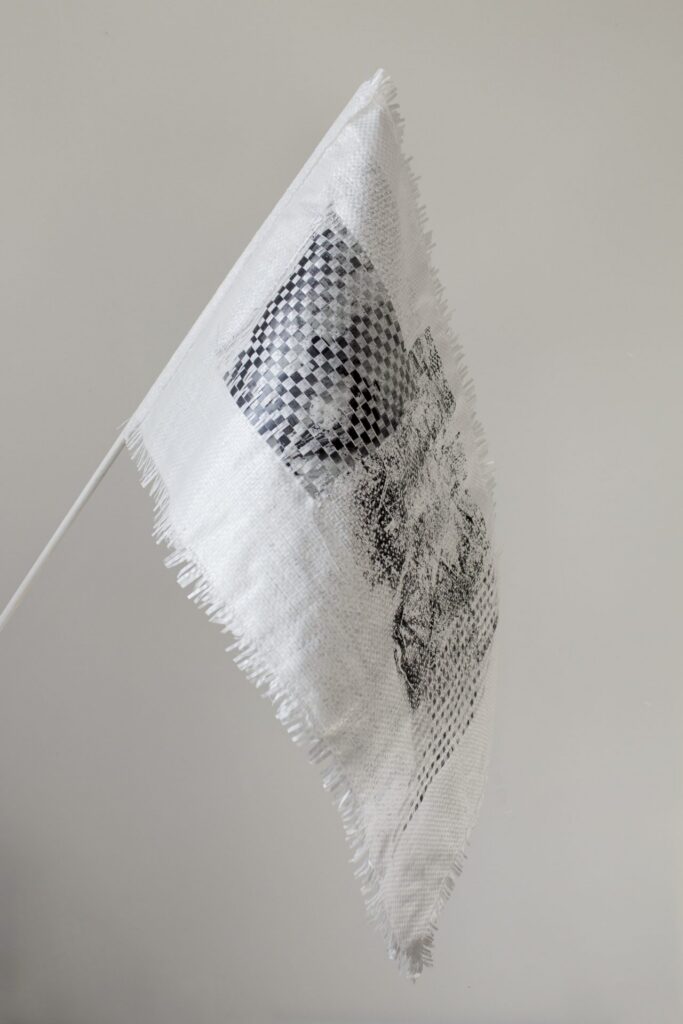
Interview with Sobia Ahmad VisArts Next Generation/ Sanctuary Studio Fellowship 2019 August 29, 2019 By Iona Nave Griesmann Weaving Google Maps screenshots and images of her childhood home in Pakistan with the various U.S. locations she finds herself in now, Ahmad creates intricate anti-flags that reference ambiguity of place and nationality. Doing so, she envisions ‘home’ for someone who is uprooted as a mythical place, one that is geographically unattainable and ever-shifting due to larger socio-political climates. About the Next Generation/Sanctuary Studio Fellowship: The Next Generation/Sanctuary Studio Fellowship provides support for a promising contemporary visual artist who is emerging and/or a recently relocated refugee or asylee. The fellowship includes mentorship, a studio residency of one year, a solo exhibition, opportunities to share and exchange with the public through teaching, workshops, open studio visits, artist talks, and a community of artist peers. The mentor will assist the Fellow with the development of creative and professional goals, access to resources and services, navigation of local artists opportunities for the exposure of the fellow’s work, and exchange of ideas. Currently Fellows are selected through nomination and invitation only. What exhibition are you working on for VisArts? I have a solo show coming up at the end of October, that opens in November. I am working on an installation around the themes of memory, home, place and geography. I’m exploring how the idea of home for me, my ancestors and much of the world today is laced with borders and nationalism. I’ve been experimenting with weaving various materials during my fellowship here at VisArts. I’m creating flags using rice bags, but I call them anti-flags because I’m re imagining the symbol of a flag as a projection of personal, rather than national identity. I’m weaving google screenshots into the rice bags, and maps of various places including images of my childhood home, the border of India and Pakistan and maps of where I have lived, and where I live now. As I weave the maps become pixelated and unrecognizable, just like the idea of home being so vague and ambiguous for someone uprooted from a place. Where did you learn how to weave? I don’t know how to weave, but I am teaching myself. Weaving and rice bags are important to the work, because I’m paying homage to my ancestral history of rice farming and rituals. I arrived at the technique and material after I had a dream about my grandfather’s rice fields in Pakistan. My grandmother used to weave many things – from veils to charpai beds. I’m thinking of weaving as a way to create a metaphorical home for myself by entering a place of meditation and ritual, connecting with and preserving ancestral knowledge. I’m sewing the flags with my grandmother. Together we are reminiscing about homes we have left behind – She in India and I in Pakistan. I’m recording all the stories she is telling me as we sew, and the audio will be part of the exhibition. Anti-flag (Detail), Sobia Ahmad, 2019, Weaving, screen print on rice bags. Much of your work contains themes of social justice and activism. Was there a turning point when you decided to center your work around these themes, or has your work always been this way? I’ve always explored social issues but maybe not so overtly. Even when I was in undergrad I knew that I wanted to make work about understanding my own identity, and how that sat within the larger sociopolitical climates. I think most of my work has been centered around exploring how our identities are created and affected by larger power structures, though I don’t think that’s the entirety of my practice. When you are exploring ideas for your work, where do you usually start? Do you have a particular research process? It’s a little bit of everything. Most of my work starts with a feeling, something that’s very personal. As I’m working through that I research about materials, history of a certain topic and other artists who are exploring similar themes. I also ask people I trust for feedback when I make something. The feeling often ends up taking the form of a question. When I was making Small Identities, the tiles with the ID photos on them, I was really interested in the question of, “How does home and architecture translate into the current political climate and rhetoric? How can I reinsert these immigrant Muslims back into the visual language in American homes today?” The arabesque tiles I’m using are a really popular motif in American homes, used in kitchens and bathrooms. I see them in people’s homes all the time and it reminded me of my childhood. I grew up seeing these shapes, and yet to see this in people’s homes around here, and not feel fully at home was something I really wanted to tease out through the work. That’s what drew me to the tiles. When audiences view your art, what questions do you hope they will ask? As I’m working through a lot of these themes, and learning that when I make work which is deeply personal, it can be very universal. People can relate to the intimate struggles in a very profound way. I’m just hoping I can draw the connections between the personal, political, historical and cultural lines. For example the language I’m using from the supreme court travel ban. I’m extracting that language, the word “alien” for example, and rearranging it in a way to strip it of the specificity of the travel ban, drawing connections with the history of the United States, how the U.S. has a long standing history of violence and exclusion, and how these words taken out of the document, are actually pointing towards a larger truth about our society and history. It’s really just about drawing parallels with the present and the past, and how what people are going through right now may