
VisArts Studio Fellowship: An Interview with Alex Braden
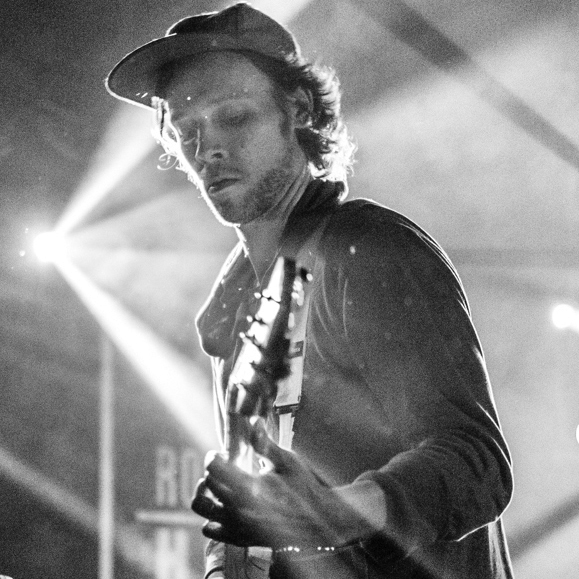
By Noa West, VisArts Summer Intern, 2017 Late at night, the 2nd floor of VisArts emanates with the reverberations of rotary telephones, televisions, and subwoofers from Alex Braden’s mixed mod studio space. Alex Braden, the current VisArts Studio Fellow, is a sound artist and musician. He received a B.F.A. in Sound Art at George Mason University in 2012. During his fellowship, Alex is continuing to stretch the parameters of how sound can be experienced in the contemporary art realm. Braden’s investigations include interactive installations that activate the senses and minds of viewer/listeners through the assemblage of sound and objects. He uses this medium to experience physical spaces, articulate social justice, explore the historical significance of daily life and gender roles, and to tap into streams of consciousness. As the Studio Artist Fellow at VisArts, Alex is working to create an immersive soundscape at VisArts from January 12, 2018, to February 11, 2018. What is the difference between a sound artist and a musician? A sound artist is less limited by the structure of music. Music has a certain set of elements: meter, melody, harmony, arrangement, etc. A sound artist can utilize those tools, but he or she is not obligated to. Sound is a very broad medium. Essentially, it’s just vibrating molecules of air that interact with your ears. So you can do whatever you want as a sound artist. As a musician, you have to follow a few rules at a time—that’s my opinion, anyway. Music is much more easily packaged—it has elements that are recognizable. Because I am both, I switch between them pretty easily, and sometimes the distinction fades. Somebody once told me that the difference between music and noise is that music is intentional, while noise isn’t. However, I don’t think that’s necessarily the case; I think that sound art is totally subjective. How do the objects that you use to generate sound fit within your concept? Do you choose them to enhance the message of your pieces? Well, it really depends on the piece. What I like about working with sound is that it allows me to work across a variety of mediums. I have seen these sound installations in essentially an empty gallery—just white walls. You would think that there is nothing going on, yet the purpose of the installation is to try to eliminate any other sensory distraction, so you can focus on what is going on with your ears. The closest I have been to just experiencing sound was through an installation maybe five or six years ago at Civilian Art Project’s old location in Chinatown. The room was so dark—you couldn’t even see your hand in front of your face. I sat on something comfy and listened to this sound loop that went all day long. It was really enjoyable, but at the same time, that beanbag chair was a part of the piece, as well as the darkness. So, to try to answer your question, I really prioritize the object that is presenting the sound. You can’t do a sound piece that does not involve some sort of assemblage. The sound itself is more than likely recorded with an array of objects, reminding you of something. But presentation provides context and experience. In my work, and specifically what I am going to do with my time as the VisArts Fellow, is to think hard about the way the sound is presented, the object, and the value of that object, as it relates to the sound itself. I just want to make sure I’m getting everything, because you’re speaking kind of softly. I do that (smiling). That’s okay. So to expound on that, a piece that I was particularly interested in, Nickel Ride, is a piece inspired by Freddie Gray. Were the physical elements that created the sound a part of the message and the metaphor? Or were you focused on solely the physical sounds? That piece has a lot of layers. I wanted to make a piece that made its own sound, and I wanted that sound to be physically activated by another sound. By putting the subwoofer inside the barrel, those frequencies were moving the barrel itself. Adding the hardware was a sonic choice. I was creating something that was very hard to endure: something that was very rackety. I wanted there to be as much physical evidence of something inside the barrel as possible within that aesthetic. The barrel also reminded me of the material of a moving truck, or a paddy wagon. Freddie Gray had just been killed, and I was kind of working through that, I was thinking about what it might have sounded like from the perspective of the driver of the van, where Freddie Gray died. You got this body, that’s chained up by hands and feet, essentially rolling around and hitting the sides of the van so violently that his neck breaks and he dies on sight, right? It seemed impossible to me, even over the roar of the engine, that the driver, and whoever else was in the van, couldn’t hear that. Knowing what’s going on and hearing that sound, it seemed impossible to me that that wasn’t their intent. Thinking about that, I really needed a base-heavy sound source in the subwoofer to create that discourse. I had been listening to Kendrick Lamar’s record, To Pimp a Butterfly, for quite some time, and I was really impressed with his ability to enter the mainstream with some very aggressive truths. So in the barrel, I played the album on loop. That was also great too because the patterns of the pulses would change, so it became this very kinetic natural thing. I chose the other songs, that were played outside of the barrel, by Peggy Lee. One of the songs that I chose was ‘Nickel Ride,’ which is an old term that they used to describe the way Freddie Gray was killed. The song is also known as ‘Rough Ride’
An Interview with VisArts Bresler Resident Artist Katie Kehoe
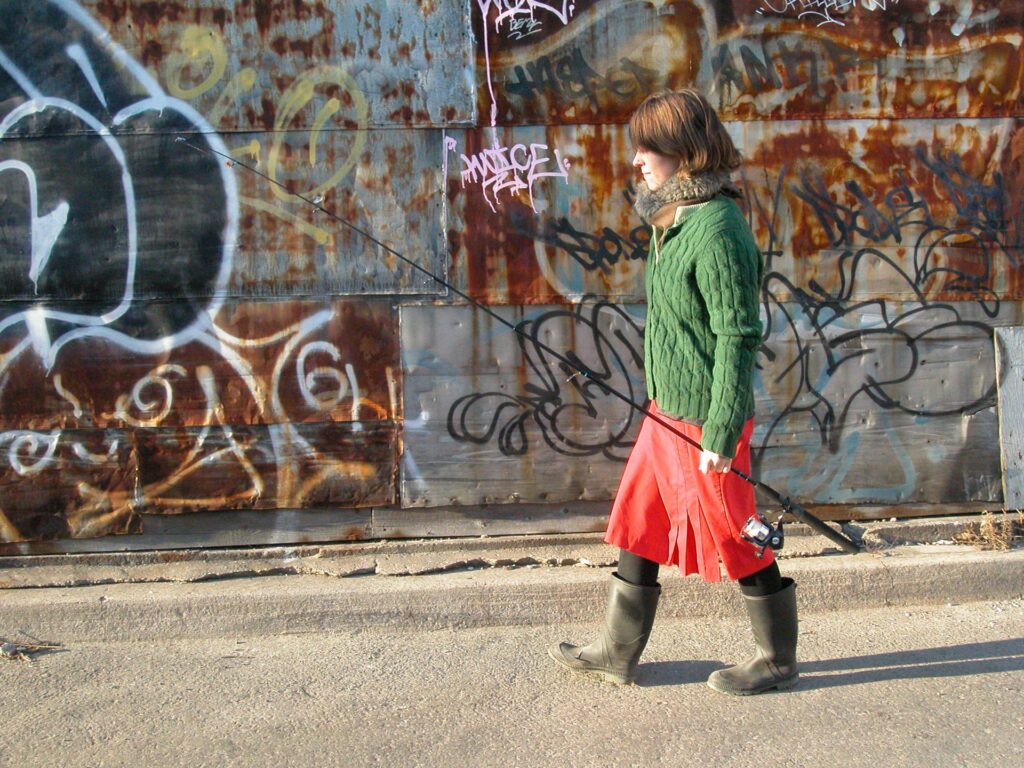
By Noa West, VisArts Summer Intern, 2017 Artist Katie Kehoe of Toronto, Canada was selected to be a Fleur and Charles Bresler Resident Artist from May to September, 2017. The four-month Bresler Residency at VisArts focused this year on artists whose primary creative practice reflects vital interest or research in the areas of social practice, performance, and community engagement. Eclectic and soft spoken, I approached her studio on the second floor of VisArts for the first time not knowing what to expect. Through the glass doorway, the afternoon sunlight filters onto her organized menagerie. Salvaged nets, tarps, foam blocks, and stacks of paper accumulate along the parameters of her studio. Katie leans over her desk sanding a foam life preserver ring, wearing a neon green trucker hat that says, ‘Provisions for Buoyancy.’ Geometric drawings, maps and images of the sea cover her walls. A pair of rubber boots and a fishing rod rest next to the door. Yet, two stories above ground, she is a metaphorical fisherman, combining her love for the ocean and the environment with social practice and performance art. Katie proceeds to tell me about her work, her passion turned almost obsession, and the elements and experiences that led her to create a body of work including performances entitled Provisions for Buoyancy that will be presented in the Kaplan Gallery January 16 – February 18, 2018. What have you been working on at VisArts? Well I’m really fresh into the residency, I arrived under three weeks ago, so I’m just getting started. I have planned a project called Provisions for Buoyancy, and I’ll be working with materials that I’ve salvaged locally, and making provisions for buoyancy out of the materials that I’ve salvaged. For example, a life ring, a poncho— that’s not necessarily a buoyancy device but it’s helpful for the rain (laughs) and I’m planning to make a boat of some sort and accessories for it— I’m thinking of it as a shack raft, at this stage. So I’ve been retrieving a lot of materials and once I produce these provisions, I’ll be activating them in public spaces; where there isn’t water but, if the sea-level were to rise by five feet, these areas could be flooded. Most likely I’ll be activating them to fulfill that purpose of the project in low-lying areas of Washington D.C., and potentially around the harbor in Baltimore. But I also intend to be carrying them around Rockville, to use them as absurd devices to engage the public. I’m also going to be producing a series of drawings that explore this concept of expanding waterways How has the Bresler Residency shaped your practice? The call for artists working in social practice, performance, and engagement with sustainability and the environment really speaks to where I am in my practice. It allows me to pursue that in a really vigorous and focused way because it’s four months. How have your works involved social practice and performance? Performance action is almost like an intervention, but without necessarily an intention to change anything. It’s like performing an action in a public place, and then being open to seeing whatever comes from that. The duration has also been a significant tool for me in my social practice and performance work. Last spring, I produced a project called Pier-Platforms, where I traveled through the southwest for 60 days salvaging materials. I then built a pier, which I installed in unconventional locations that ranged from remote desert settings, to urban environments. It also was a platform that allowed me to continue creating what I call “performance actions.” All in all, it was a project that referenced excessive waste production, and expressed my growing uncertainty for how the climate is changing and what it really means. Yet, when I was in urban areas, the pier was used as a platform for communication and meeting. While I was in rural areas, I was there alone installing and taking photos to document the experience. I have a passion for the water, and I think of myself as a nomad. So prior to that, I did a piece called One Year and Twenty-Four Days of Fishing, where I carried a fishing rod and wore rubber boots everywhere for over a year. I didn’t tell people it was a performance project, I just did it— the fishing rod was a catalyst for so many interactions with people. People would say ‘Where are you fishing?,’ ‘What are you fishing for?’ and I would say where I was going and what I was going to do there. Ultimately, I was really curious about going into that metaphor of fishing like, ‘What are we fishing for?’ with a deeper meaning. These recent projects have really informed what I’m doing here. These projects have been durational. I’ve been performing actions in public spaces using some kind of device that is absurd and unconventional and using that as a catalyst for interaction. Katie Kehoe, One Year and 24 Days for Fishing, performance What has inspired you to become passionate about climate change and emanate it through your work? There’s a lot of origin for this work, I’ve had a lot of influences. As a little girl, I used to love fishing. I would go out every day— I lived on a lake and I would fish from morning until night. I come from a family of fishermen, and although I wasn’t raised near thar culture, I was always fascinated by it. My greatest influence would be my father—who raised my sister and me as a single parent since I was 11 ans she was 13. He taught us to stand up for what we believe in, to be independent, to value community, respect the environment, and instilled in us an intense work ethic, self-discipline, and determination. I addition, I not only work with salvaged materials because I see so much that has been thrown out, but also because of his influence. He has also taught me most of